
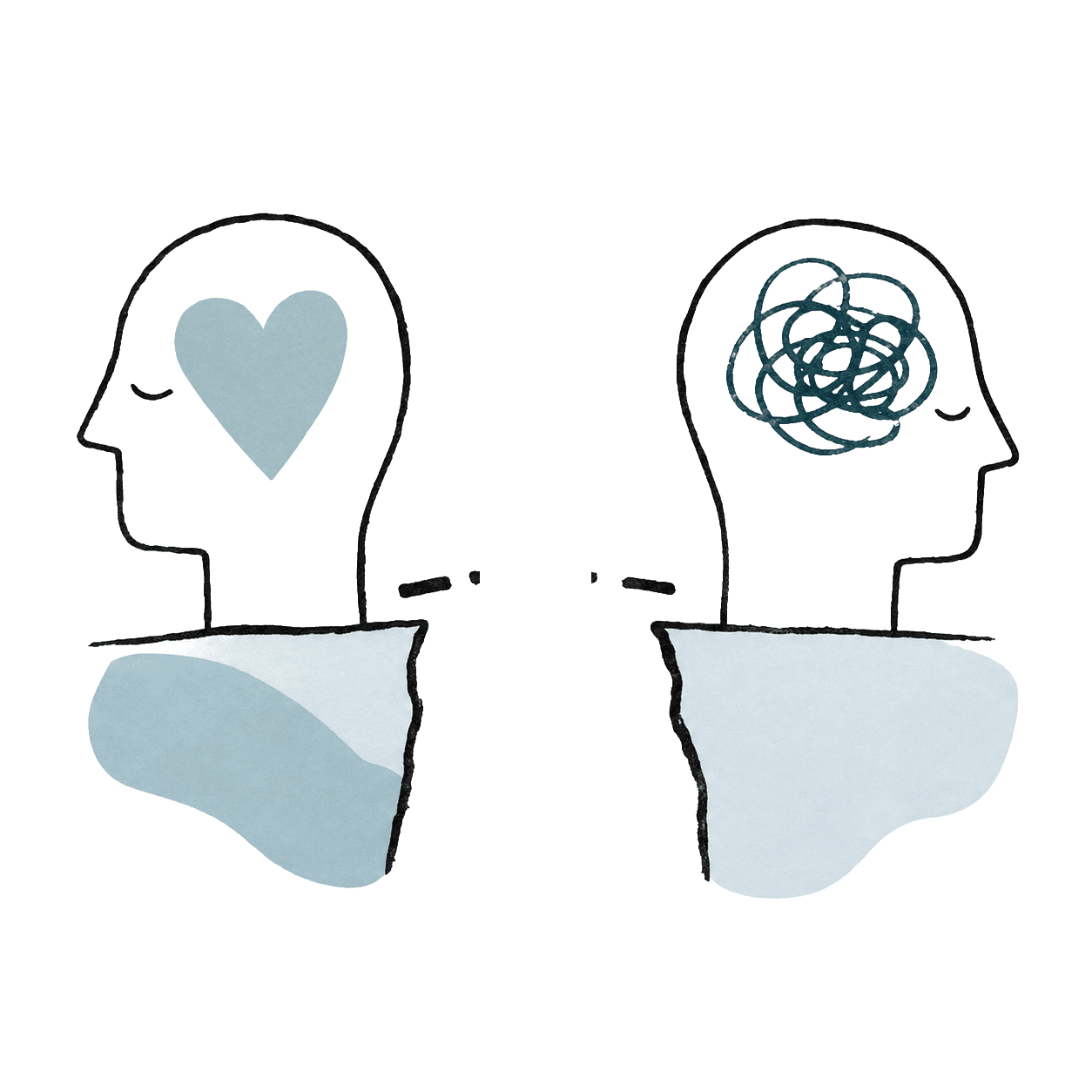
James and Lawrence just ran the second of three sessions with Product Managers at Hippo Digital, focused on one relationship that comes up again and again in government delivery: the one between delivery teams and policy colleagues.
Both want good outcomes. Both are often working from the same evidence. And yet the relationship is frequently the hardest part of the job.
The sessions have been built around a real situation: a major government digital programme, shaped by a ministerial commitment and significant structural constraints, where early discovery work uncovered findings that didn't fit the original brief. That's a genuinely difficult conversation to have well, and it's exactly the kind of moment where understanding the person across the table, not just the evidence, makes the difference.
Before the sessions, everyone completes the Lighthouse Mindset questionnaire and gets a personalised report back. It maps how they tend to work across six traits, whether they lead with vision or stay grounded, push the pace or let things unfold, decide alone or bring people in, and it names the archetype that fits them best. The first value is plain self-recognition: your own defaults set down on paper, including the ones that quietly cause friction.
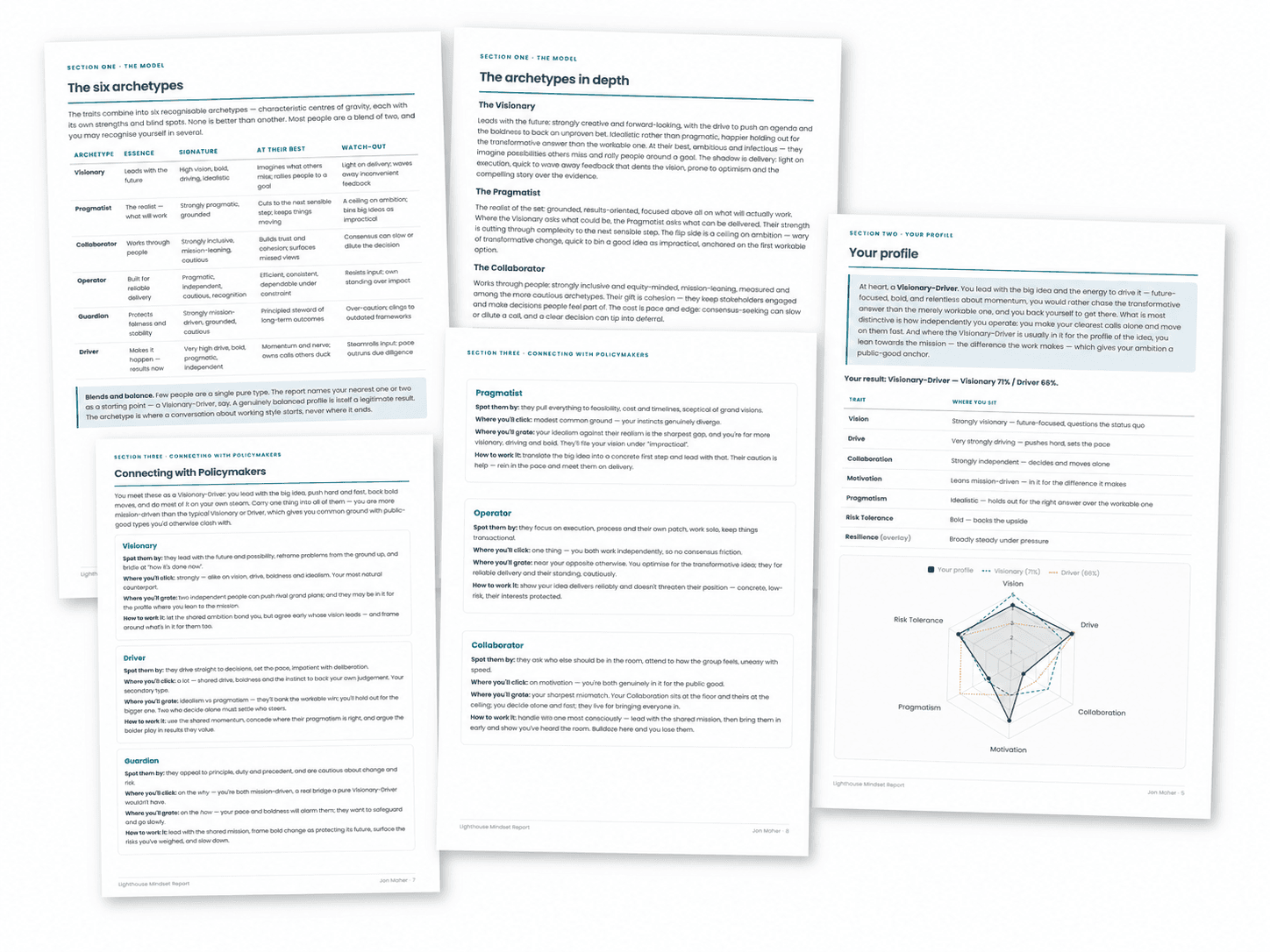
The same six archetypes describe the policy colleagues on the other side of the table. The report goes further than self-knowledge, giving each person a read on the other archetypes and how to handle each one: where you'll click, where you'll grate, and which arguments actually land.
A bold, fast-moving Visionary and a cautious Guardian are not won over by the same things. Knowing who you're sitting across from, and what moves them, is empathy made practical.
This isn't a fixed curriculum. It's our general approach to capability building, applied to whichever relationship is causing friction for a team. In this example, it was the product/policy interface. For another organisation, it might be a relationship with finance, with a delivery partner, or between policy and operations. It comes down to the same thing every time...
Point the empathy you already have for your users at the colleague across the table. It's the most underused skill in delivery.